

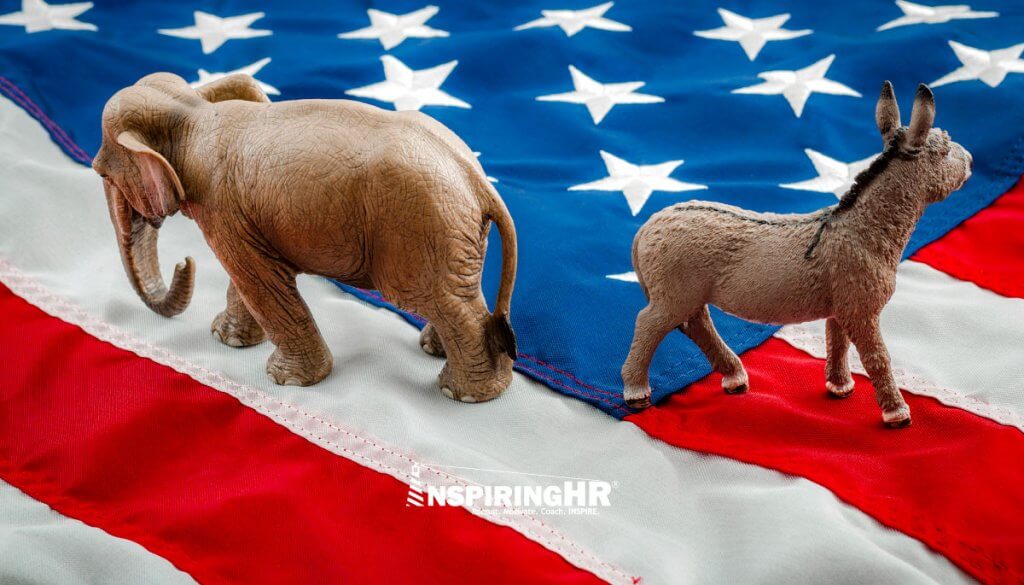
Politics often weave their way into our daily conversations – even at work. For small businesses, employers must consider how they will handle political expression with their employees. While banning politics at work can be a tempting solution, especially during election season, that decision may not align with your company’s culture. Instead, think about what’s appropriate for your organization, how and when political expressions should occur, and how you will address situations that arise.
The Reality of Politics in Today’s Workplace
Employers want to drive divisiveness out of the workplace yet politics is one of the most divisive issues in America right now. Recent surveys indicate that 87% of employees are concerned about politics in the workplace, yet only 8% of organizations have established clear policies on politics. This disconnect suggests that many businesses are navigating uncharted waters when it comes to politics at work.
For many small businesses, it’s essential to company culture and team morale that employees bring their whole selves to work, including their political opinions and beliefs. So how do you develop a policy about politics that can respect diverse viewpoints and maintain a happy, healthy workplace? Try these steps or talk to an HR consultant today about what makes sense for your company’s unique needs.
Consider Your Company’s Needs & Culture
Before implementing policies, take a step back and assess your company culture. What are your core values? How do you want your team to interact with one another? These questions will guide you in crafting policies that align with your organization’s mission and vision. Other factors can include whether advocacy is part of your mission or if your company has government contracts and needs to maintain positive relations, regardless of political party.
Establish Clear Guidelines
Setting boundaries is key. Here are some practical suggestions to help you navigate politics in the workplace:
- Be Consistent: Ensure that your policies apply equally to all employees, regardless of their political affiliation. Make sure any rules don’t favor one party. For example, if you ban political hats, it must be ALL, not just certain ones. Consistency fosters trust and demonstrates fairness.
- Focus on Business Outcomes: Encourage discussions that relate to work rather than personal beliefs. Highlighting the importance of collaboration over political disputes will keep the workplace focused on achieving common goals.
What to Include in Your Political Policy
Whatever you decide for your policy, make sure it’s clear and encompasses the various ways politics may show up in the workplace.
- Discussions: Decide if and when political discussions are appropriate. Are these conversations allowed during breaks, or should they be limited to specific times and places? Establishing these guidelines helps manage expectations.
- Attire: Will your employees be allowed to wear political clothing in the office? Do you need to have a policy around wearing the company logo to events or rallies? Make it clear if such expressions are welcome, ensuring employees understand any potential implications for not adhering to the policy.
- Communication Channels: Clarify the channels through which political discussions can occur. Is political activity on work computers or from a work email address allowed? If discussions are permitted, can employees use team messaging software or express views in team meetings? Define what is acceptable to maintain a respectful environment.
Free Speech vs. Workplace Rights
When it comes to speech in the workplace, there are some nuances to consider. While employees have the right to free speech, it’s important to note that the First Amendment does not grant unrestricted rights in the workplace. Within certain limits, employers can set policies about what employees discuss during work hours. Make sure you’re familiar with applicable laws.
- Protected Speech: Understand when employee speech is protected, particularly in relation to terms and conditions of work, as protected under the National Labor Relations Act (NRLA).
- State Laws: Some states have specific laws regarding mandatory meetings where politics are discussed. Other state laws prevent employers from taking action against employees for lawful off-duty conduct, social media posts, etc. Familiarize yourself with your local regulations to ensure compliance.
Supporting the Right to Vote
Supporting civic engagement is an important part of culture for many businesses. While there’s no federal requirement for employers to provide time off for voting, many states do have guidelines. Consider how you will handle employees participating in politics.
- Voting Policies: Will you encourage employees to vote and provide information on how to register and polling places? Does your state require labor postings about voting rights? Does your state require paid time to vote if employees lack time to do so before or after their shift? Make sure to establish a clear policy regarding time off for voting.
- Neutral Stance: It’s crucial not to offer incentives tied to specific voting outcomes. Create an environment that respects individual choices while encouraging participation.
Navigating politics in the workplace requires careful consideration and clear communication. By crafting well-defined workplace policies for politics, you not only promote a respectful environment but also empower your employees to engage in meaningful discussions without fear of conflict. Creating a thoughtful approach to workplace politics can lead to a more cohesive, engaged, and respectful team.
If you need assistance in developing these policies tailored to your small business, Inspiring HR is here to help. Together, we can help you create a workplace where everyone feels valued, regardless of their political beliefs.


